

Food and the
human connection
Culinary Roots is about more than preserving recipes or celebrating regional cuisines. Increasingly, diners are looking to understand the people, cultures and lived experiences behind the food they eat. Few Australian hospitality businesses embody this shift more powerfully than Plate It Forward, where culturally led food, personal storytelling and social impact come together around the dining table.
For founder Shaun Christie-David, the evolution of Plate It Forward has been ‘really magical’. Without question, the impact of the foodsharing enterprise he established in 2020 has been remarkable.
Since its launch in 2020, Plate It Forward has employed nearly 300 people from marginalised communities, paid $9.5m in wages to its staff, donated more than 650,000 meals to assist the fight against food insecurity and provided 280,000 hours of paid training and employment.
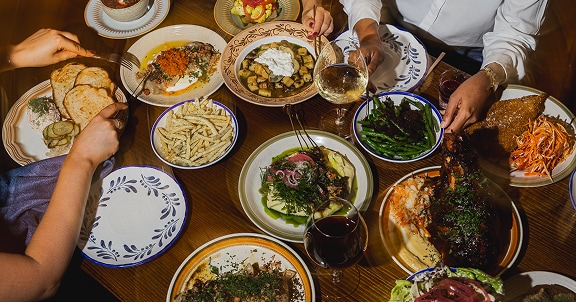
Plate It Forward owns and operates three restaurants—Colombo Social, Kyiv Social and Kabul Social—alongside catering and event offerings. Every dish served by the organisation helps to provide meaningful employment, fund meals for people facing food insecurity and bring communities together.
Yet Plate It Forward’s success isn’t built on social purpose alone. Sydney diners have embraced the restaurants because the food tells authentic stories of migration, heritage and identity that are rarely represented in mainstream hospitality.
“Traditionally we’ve seen storytelling being about the decadence of the produce, but what we’re seeing now is who made the food, and the glorification of the chef, is becoming less important,” says Christie-David. “Here, we give people an experience to meet a person who they might never cross paths with—a First Nations person, an asylum seeker woman from Afghanistan.” Christie-David points to the ideas of trailblazing chef Asma Kahn as a powerful example of the gap between domestic food culture and professional kitchens.
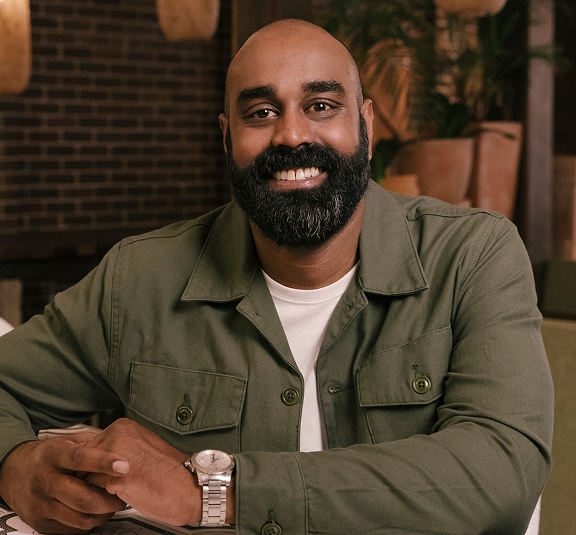
“The great Asma Kahn, who I deeply admire, says ‘walk into any migrant kitchen, and the woman is cooking. The matriarch of that family is the only person they would trust to cook. And then you go into commercial kitchens and they’re not there.’ “What we’re trying to drive is a shift that recognises there are cultures that have not been represented fairly and equally.” Plate It Forward demonstrates how a positive social outlook and trendled dining can successfully co-exist. Christie-David sees the growing influence of Gen Z as a major factor behind this change.
“I think this generation is the most connected but also the most socially conscious and responsible. And I think they’ve got a worldview on things that is amazing. I’m really glad that the future is in their hands.”
So, has Plate It Forward reached the point where its ambitions have been met? Not even close, says Christie-David. “There is no relenting until everybody gets a job that deserves one from communities that are underrepresented and underestimated, and until no one goes hungry. “So, I wish we could stop. I wish I didn’t have a job. I wish we were redundant! But we will keep fighting the fight until that isn’t the case.”
Plate It Forward shows us how Culinary Roots extends beyond provenance and regional recipes. When food becomes a vehicle for sharing culture, preserving traditions and creating opportunity, it builds a deeper connection between chef and diner. It’s a reminder that some of hospitality’s most memorable experiences begin not just with what’s on the plate, but with the story behind it.
To learn more about Plate It Forward, visit plateitforward.org.au
From trend to table
More ways to put this trend into practice
Some of hospitality’s most memorable
experiences begin not just with what’s on
the plate, but with the story behind it.
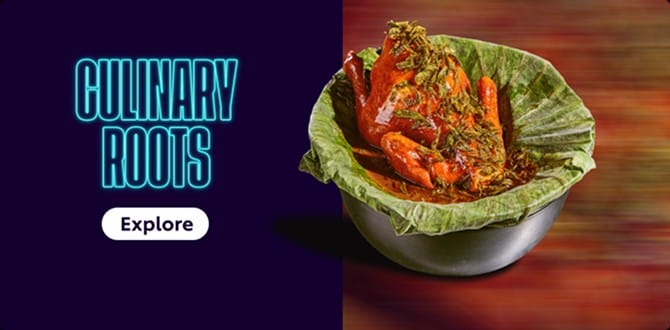
Discover Culinary Roots recipes
Explore more of Future Menus Vol. 4 trends


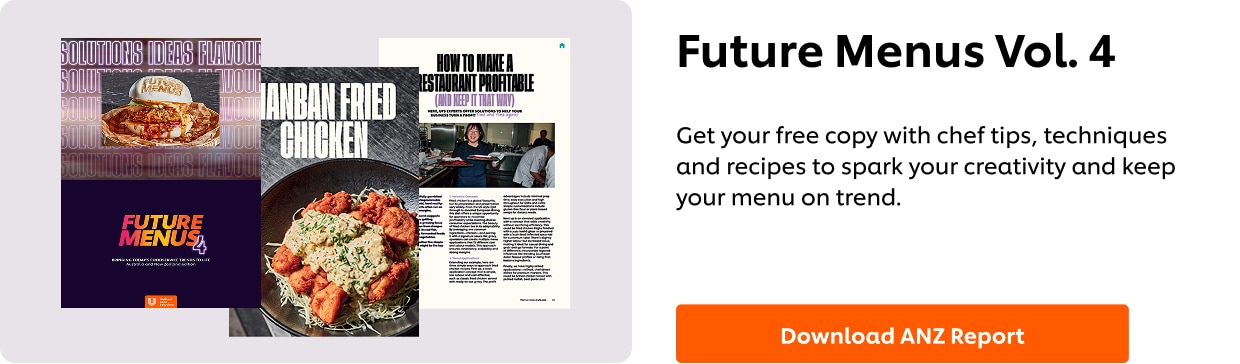
To celebrate the launch of Future Menus Vol. 4, we have an exciting promotion for you!